Stainless Steel Grades 304, 316, 321, 904L: A Complete Comparison
By Ragnar Metals & Tubes Engineering Team • May 22, 2026 • 7 min read
Choosing the wrong stainless steel grade costs money — either through over-specification (buying 904L when 316L would last just as long) or under-specification (watching 304 fail in a coastal environment). This guide gives you the decision framework used by our export team to match material to application.
Grade 304 / 304L
Composition: 18% Cr, 8% Ni — the "18/8" stainless you see everywhere.
Key properties: Excellent general corrosion resistance; easy to weld; good formability; widely available at the lowest price point of any stainless grade.
Limitations: Susceptible to pitting and crevice corrosion in chloride environments (>200 ppm Cl−. 304L (low carbon, ≤0.03% C) is specified where welding is involved to prevent sensitisation.
Applications: Food and beverage equipment, kitchen appliances, architectural panels, water tanks, chemical containers for mild environments.
Grade 316 / 316L
Composition: 16% Cr, 10% Ni, 2% Mo — the molybdenum is the key difference from 304.
Key properties: The 2% Mo dramatically improves chloride pitting resistance (PREN ~24 vs ~18 for 304) and crevice corrosion resistance. 316L (≤0.03% C) is the standard for welded fabrication.
Limitations: Not suitable for hot seawater or environments above ~1000 ppm Cl− at elevated temperatures. Not ideal where sensitisation from heat input is critical without post-weld annealing.
Applications: Offshore platforms (non-submerged), pharmaceutical and food processing, marine hardware, heat exchangers, chemical storage for moderate chlorides, the most widely exported stainless steel globally.
Grade 321
Composition: 18% Cr, 10% Ni + titanium stabiliser (Ti ≥ 5×%C)
Key properties: Titanium stabilisation prevents carbide precipitation (sensitisation) during exposure to temperatures of 400–900°C. This makes it the go-to grade for applications where post-weld heat treatment is impractical.
Limitations: Similar corrosion resistance to 304 — not designed for aggressive chloride environments. Slightly more expensive than 304/316L.
Applications: Exhaust manifolds, jet engine parts, heat exchanger shells in high-temperature service, furnace components, expansion joints, aircraft firewall fittings.
Grade 904L
Composition: 20% Cr, 25% Ni, 4.5% Mo, 1.5% Cu — a highly alloyed austenitic grade.
Key properties: Excellent resistance to reducing acids (sulphuric acid at all concentrations), phosphoric acid, acetic acid, and formic acid. PREN ~36 — better than 316L in chlorides. The copper addition specifically targets sulphuric acid resistance.
Limitations: Significantly more expensive than 316L (typically 3–4× the price per kg). Often over-specified when 316L or duplex 2205 would perform equally well.
Applications: Sulphuric acid plant piping, phosphoric acid production, seawater handling where duplex is not permitted, wet scrubbers, pulp and paper digesters.
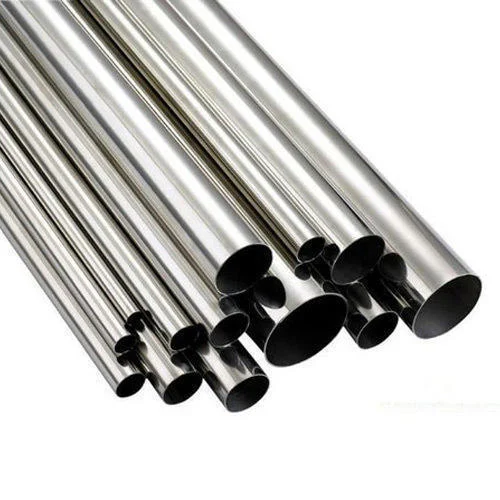
SS 304/316L Pipes
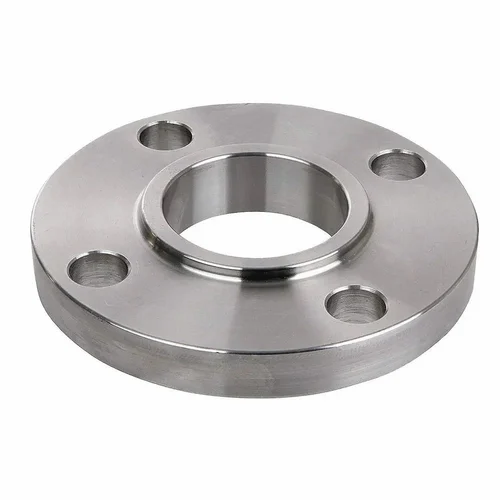
SS Flanges
Quick Comparison Table
| Property | 304 / 304L | 316 / 316L | 321 | 904L |
|---|---|---|---|---|
| Cr % | 18 | 16 | 18 | 20 |
| Ni % | 8 | 10 | 10 | 25 |
| Mo % | — | 2 | — | 4.5 |
| Stabiliser | — | — | Ti | Cu |
| PREN (approx.) | 18 | 24 | 18 | 36 |
| Temp. resistance | to 870°C | to 870°C | to 900°C (stabilised) | to 400°C |
| Relative price | 1x (base) | 1.3x | 1.4x | 3–4x |
| Key strength | General use, low cost | Chloride resistance | High-temp weld zones | Sulphuric acid service |
Need Any of These Grades?
Ragnar Metals & Tubes stocks 304, 316L, 321, 347, 904L, and special grades in pipe, tube, fittings, flanges, round bars, and fasteners. All supplied with MTC 3.1, third-party inspection available.
WhatsApp Send EnquiryRelated pages: SS Pipe & Tube • SS Flanges • SS Fittings